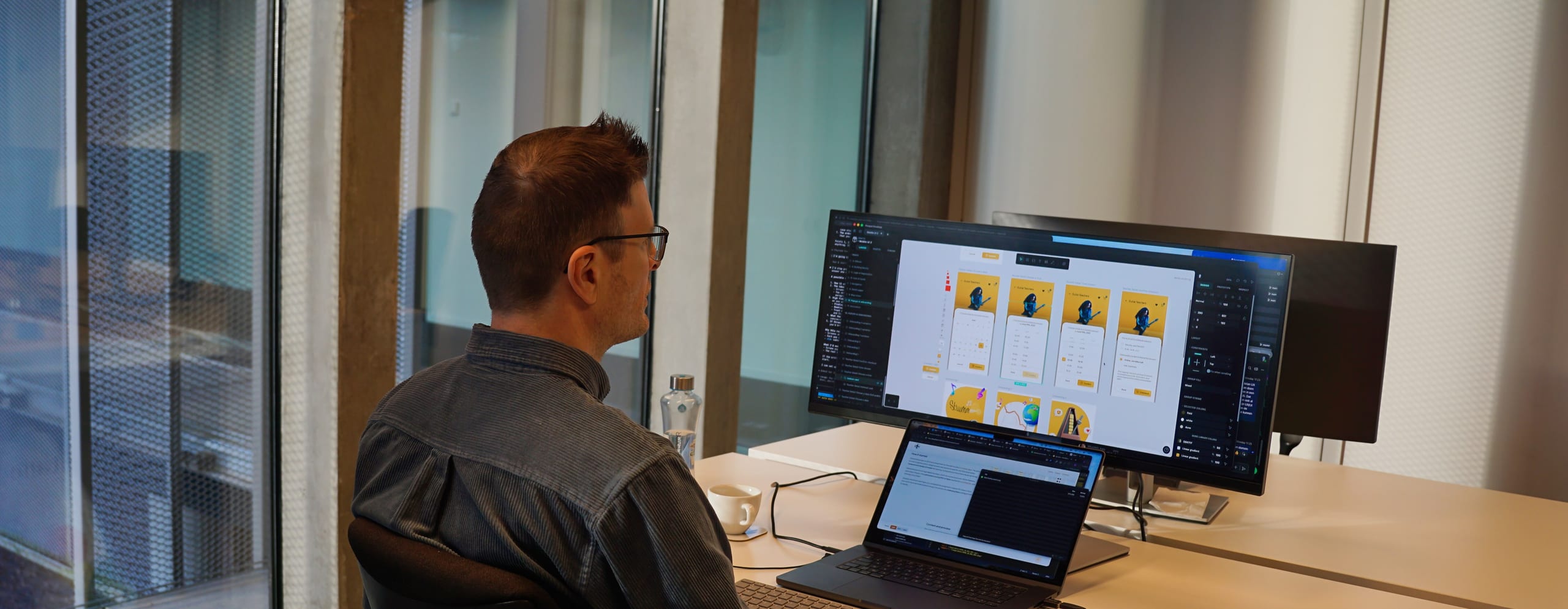

About me
I'm a design engineer: a designer who builds. I've designed and coded interfaces since 2005, starting as a Flash developer who also filled gaps in the design, like motion, missing assets and states. When Flash disappeared, I moved to HTML, CSS, JavaScript and frameworks like React and Angular. Since 2019, I've also been the sole designer on client projects.
What I do
I'm at my best on websites, large or small, from the component library to every page built from it. I close the gap between design and code. I know my way around content-heavy sites for public, financial and media organizations. And I create motion that engages users.
How I work with teams
I make sure a design can be built before it reaches developers. On the OECD website, I checked every design against AEM with a functional analyst and our technical lead, then estimated the front-end work. I steer the design through frequent demos and feedback sessions. Once it's built, I work alongside the developers to keep the build true to the design.
I like to inspire teams through knowledge-sharing sessions and documentation. I'm happy to take on the responsibility of plotting a direction, taking differing views into account. My coaching and reviewing style is thorough but fair. I forgive beginners' mistakes.
How I use AI
AI takes the repetitive translation work out of the step between design and implementation. At AMEXIO, I build reusable workflows that take consultants from a Figma or Penpot source of truth to production-ready front-end code and back, without losing the design's intent or the code base's conventions. They generate components, keep design tokens in sync and check accessibility. I help colleagues adopt them through guidelines and demos.
What I care about
Everything I do starts from principles, whether design, code, process or personal. I establish them with every project and team, then revisit them as the work grows. I do my best work where respect goes both ways, with users, colleagues and clients. The same respect goes to a client's brand and to what a team already built.
Consistency, both visually and in the code. This is what turns a correct implementation into one people enjoy using. I want decisions to stick. On Wikifin, approved screens stayed approved. And I want less to build and maintain. On the OECD website, I brought 14 header variants down to 4 components.
In short
- Designing and coding interfaces since 2005
- Senior UI developer at AMEXIO on customer-facing websites (KBC, Mediafin, DEME) and mobile apps (KBC, Mediafin)
- Owner of the component libraries for the OECD and the FSMA
- Mobile App UI Design 1 certification, Hype4 Academy
- Tools and tech: Claude Code, Figma, Penpot, Model Context Protocol (MCP), HTML, CSS, Sass, JavaScript, React, Angular
- Speaker at SmashingConf Antwerp 2024's Jam Session with "Fusion Teams Build Better Products", on how designers and developers work together
- Designer and developer of this website, from its component library to every page, plus the guidelines that steer the AI agents I build it with
Outside work
I've been a musician for over 30 years, performing live regularly as well as writing and releasing music. That's why I'd love to turn Strumm into a real product.
